Tuesday, 14 February 2017

Making a retro style handbag - tutorial

Recently I started selling retro handbag handles, made of plastic. Some of them imitate wood to the point that you may have serious doubts as to what they are actually made of. But let's stick to the plan, this post was to be a help to those who are not sure how to make a DIY purse using the retro handles.


Apart from the handles we will need some fabric. It may be matching or contrast, I am going to use black handles and some black-and-white fabric for my handbag.

Sunday, 22 January 2017

Henri Hamm - A great button designer

Have you heard of Henri Hamm? I hadn't, until I discovered his buttons at that fantastic button exhibition in Paris. I took a picture of his name to learn more about this fascinating figure. To my surprise, there was not much about this great man on the Internet, not even a mention on Wikipedia!


When I saw this, I immediately decided to join and published a small article about him, as surely he was a great figure, worthy of an article.

Wednesday, 7 December 2016

Vegetable ivory - Vegan and eco friendly buttons from early 20th century

Although named after ivory, a controversial material from today's perspective, it has nothing to do with African wildlife. Tagua nuts come from corozo palm tree in south America. They are 100% vegetable and sustainable material, only resembling the authentic ivory in colour, hardness and the grain, which is a bit more tree-like. However, since modern plastic was introduced, they have become less and less popular.

Vegetable ivory buttons can be carved and dyed into small pieces of art!

Friday, 11 November 2016

How to make a sew-on duffle coat toggle closure - tutorial

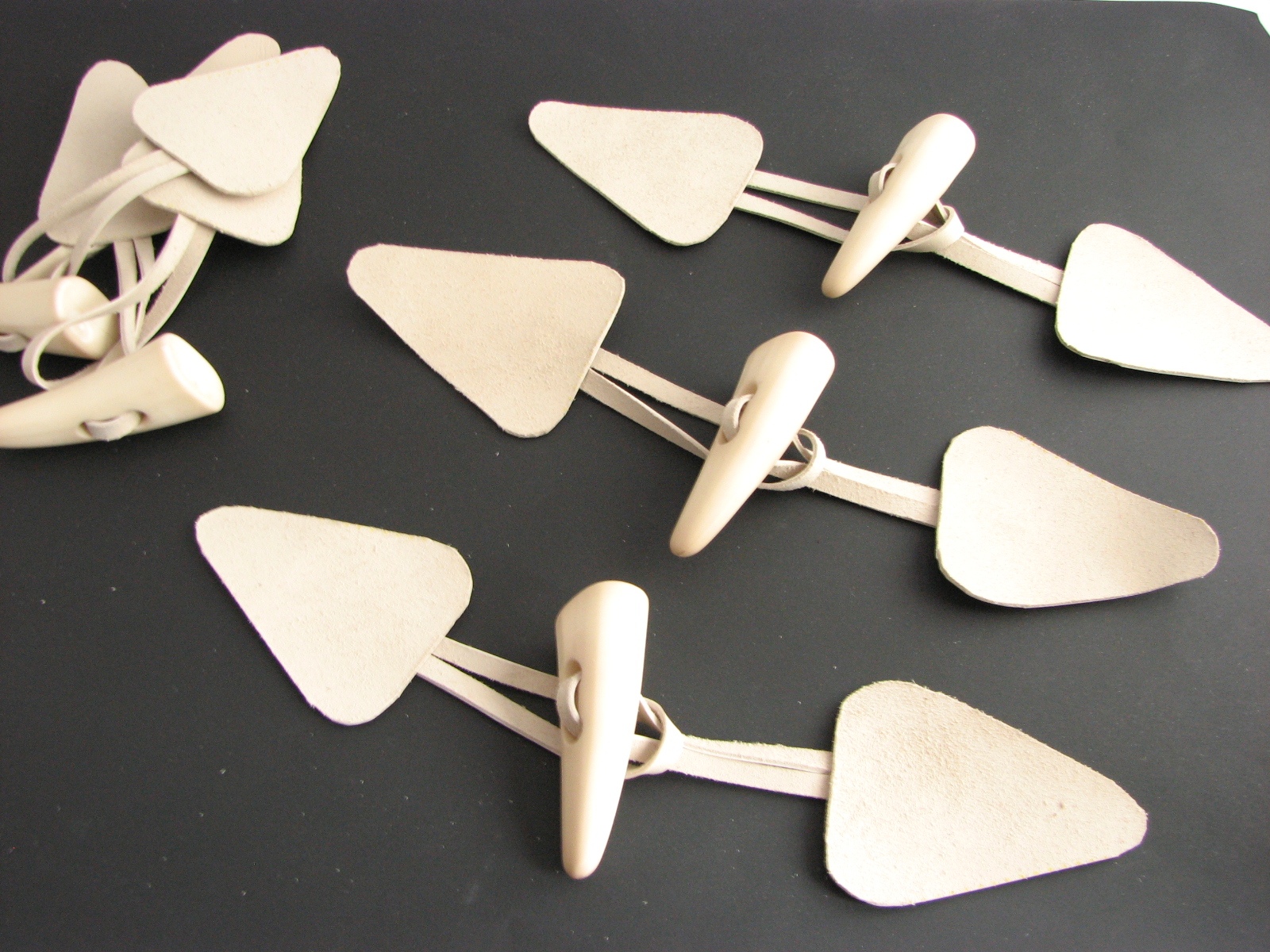
Duffle coats are all the rage, back from 1970 (and 1990s, and... well, they ARE practical and men love their casual sporty air). Today I am going to show you how to make a complete sew-on closure for a duffle coat, using toggle buttons and leather. We will also need some leather straps or similar.


First you need to decide on the shape of the leather pads. They may be square (that's the easiest to cut) or triangular and rounded on the corners. This is my favourite, though I prefer elongated triangles personally, like those you can see in the pictures above. If you are not inspired to design your own shape, you can use the measurement from the picture below to trace them onto your leather.

Thursday, 3 November 2016

Boot buttons

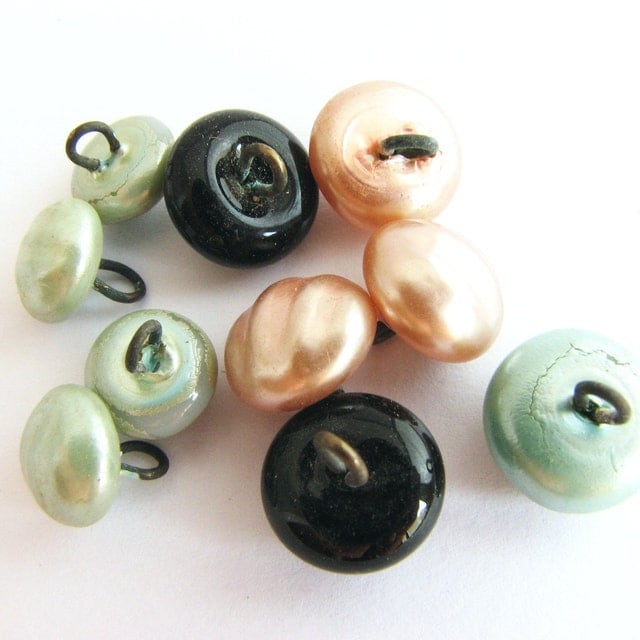
Nowadays, most footwear is designed to fasten with Velcros, zippers and snaps, some have shoelaces, and some even have parts made of elastic to minimise the fuss with fastening and unfastening. But in the olden days, especially women's boots had a row tiny buttons on metal loop shanks. They were popular until 1940s, when other closure systems became more widespread.


The boot buttons above are quite a luxury compared to most of the kind, made of glass and painted in beautiful colours, like mint green or pale pink. Most boot buttons, however, were made of enamelled metal, and the colours were far less exciting.

Tuesday, 11 October 2016

Button stamps

Dear all,

Until recently, I used to buy the button stamps for envelope decor on Etsy, from other sellers - something very practical and time saving. But then I asked my stamp provider if she could carve one specially for me. She said she was very busy and could not carve any custom stamps...

bubblemailers with button stamps

But I am actually grateful for that because that's when I decided to try my hand at stamp carving.

Friday, 7 October 2016

Celluloid - the indispensabe spy's equipment

Celluloid buttons were the very first I could identify among my buttons. I could clearly see they were unlike the other buttons. And I was not wrong. But first I have to explain myself why I used this unlikely title for this post. Celluloid sheets formed part of basic spy tools: as it is a highly inflammable material, these sheets helped them destroy classified information before it reached the hands of the enemy. During cold war it must have been something very common (I mean both destroying and acquiring classified information). Nowadays spying is more about hacking, so more silicon than celluloid is used in the industry. So let's get back to the buttons.

A range of celluloid buttons from my original collection.
Some have already sold out.